AI Search Visibility Roadmap: A 90-Day Plan and Beyond
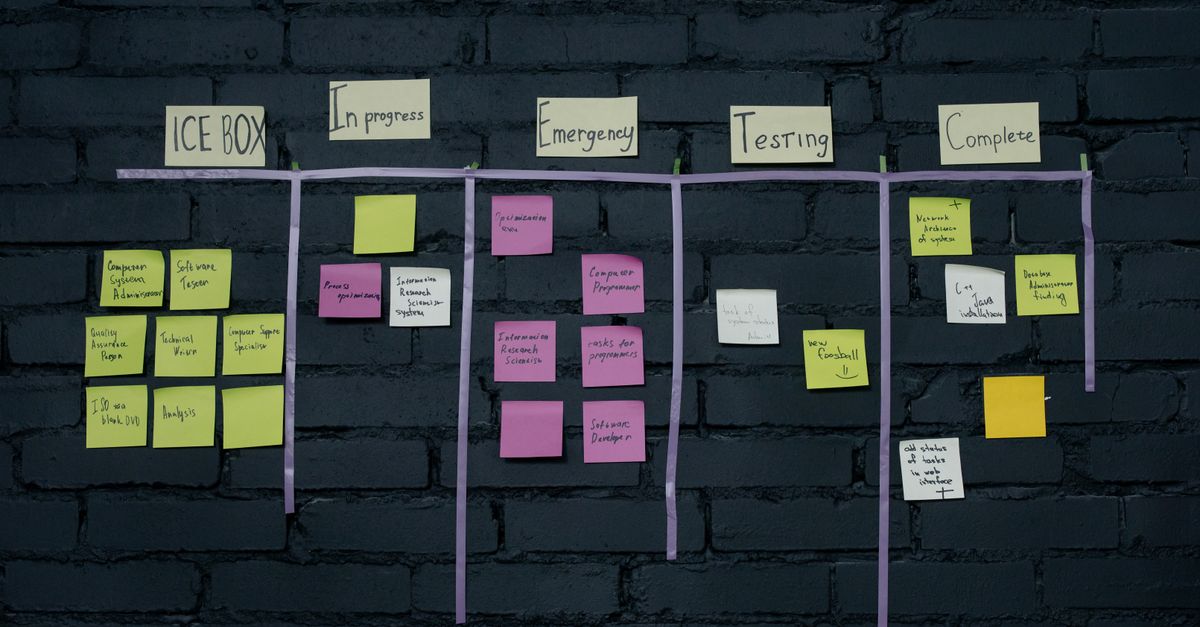
An AI search visibility roadmap is a phased plan that puts the work of getting your brand named in AI answers into the right order. It runs in three 30-day phases: fix crawler access and measure a baseline, then improve and publish content, then earn third-party mentions and report results. After day 90, the cycle repeats every quarter.
Key takeaways
- Order matters: AI search crawlers must reach your pages before content work can pay off.
- Measure a baseline in the first 30 days, because without one you cannot prove any improvement.
- Days 31–60 are for content, with direct answers first and claims backed by cited sources.
- Days 61–90 are for authority, since AI engines lean heavily on what other sites say about you.
- After day 90, run a quarterly cycle that adds engines, markets and fresh content step by step.
What is an AI search visibility roadmap?
An AI search visibility roadmap is a time-based plan for improving how often AI tools mention and cite your brand. It turns a strategy into phases with dates, owners and exit criteria, where an exit criterion is the test that tells you a phase is finished and the next one can start.
The roadmap covers the AI answer engines your buyers use, including ChatGPT, Perplexity, Microsoft Copilot, Gemini, Google AI Overviews and Google AI Mode. The scale is significant: at Google I/O 2026, Google said AI Overviews had over 2.5 billion monthly active users and AI Mode had passed 1 billion (Google, May 2026).
A roadmap is not the same thing as a strategy. The strategy defines what you want and why, which our guide on how to build an AI visibility strategy covers step by step, while the roadmap defines what happens in which week and who does it.
Why use a phased roadmap instead of a to-do list?
Some tasks depend on others, and a flat to-do list hides those dependencies. A roadmap puts the blockers first and gives each team a clear start and end date.
Think of the work as three layers:
- Access. AI search crawlers must be able to fetch your pages, and search engines must index them.
- Content. Your pages must answer the questions people actually ask, with facts that can be checked.
- Authority. Other trusted sites must mention and cite you, so engines have independent sources to rely on.
If the first layer is broken, work on the other two is largely wasted. For example, OpenAI says sites that block OAI-SearchBot "will not be shown in ChatGPT search answers" (OpenAI crawler docs), no matter how good their content is.
A roadmap also sets honest expectations, because no one controls when an engine picks up a change. Google's guide to generative AI features says it plainly:
"Indexing and serving aren't guaranteed."
That line comes from Google's guide to optimizing for generative AI features. A responsible roadmap therefore promises work and measurement, not rankings, and it is worth saying so to leadership at the start to avoid difficult conversations later.
What does the 90-day roadmap look like?
The 90-day plan has three phases, and each one ends with a clear exit test that should be passed before the next phase begins.
| Phase | Days | Goal | Key outputs | Exit test |
|---|---|---|---|---|
| 1. Foundation | 1–30 | Fix access and measure | Crawler audit, prompt set, baseline report | Baseline recorded for every engine |
| 2. Content | 31–60 | Close content gaps | Updated priority pages and new answer pages | Priority pages live and indexed |
| 3. Authority | 61–90 | Close source gaps and report | Earned mentions and a first results report | Report shared with leadership |
| 4. Quarterly cycle | 91+ | Expand and repeat | New prompts, engines and markets | Quarterly review completed |
The next sections break each phase into concrete tasks.
Days 1–30: How do you set up the foundation?
Spend the first month on access and measurement rather than publishing, because you need to know exactly where you start before you change anything.
A simple weekly plan for the first month:
- Week 1: audit crawler access and indexing for your most important pages.
- Week 2: write the prompt set and agree it with sales and product.
- Week 3: run the baseline on every engine, several times per prompt.
- Week 4: set up reporting and share the baseline with the wider team.
Audit crawler access and indexing
Check robots.txt for the crawlers that feed AI search. Allow OAI-SearchBot for ChatGPT search and PerplexityBot for Perplexity, and keep Googlebot and Bingbot allowed. Note that GPTBot is OpenAI's training crawler, so blocking it does not remove you from ChatGPT search. Our glossary explains AI crawlers in more depth.
Then confirm that your key pages are indexed and eligible to show a snippet in Google, which Google lists as a requirement for appearing in AI Overviews or AI Mode.
Build a prompt set and baseline
List the questions your buyers ask at each stage of their journey and group them by topic. Run each prompt on each engine a few times, and record the following for every answer:
- Whether your brand is named.
- Whether your site is cited as a source.
- Where you appear in the answer.
- Which competitors and third-party sources appear instead.
Set up first-party reports
Turn on the free reports the engines provide. Google's Search Console has a Generative AI performance report for AI Overviews and AI Mode that shows impressions by page, device and country, with the usual 1,000-row limit. Bing Webmaster Tools added an AI Performance report in February 2026 that shows citations and the "grounding queries" behind them for Copilot. In your web analytics, segment referral visits from AI assistants so you can connect visibility to traffic.
This Search Central video covers Google's generative AI reports in Search Console.
Days 31–60: What should you fix and publish?
Spend the second month on content, starting with the pages that matter most commercially and then filling the gaps the baseline revealed.
Rework your priority pages
Pick the ten pages closest to revenue and work through each one:
- Put a direct answer in the first one or two sentences of each section.
- Add question-style headings for the follow-up questions buyers ask.
- Back important claims with numbers and named sources, and link to them.
- Add a comparison table where readers weigh options.
- Show the date the page was last updated.
The third point has the strongest research support. The GEO study by Aggarwal et al. found that citing sources, adding quotations and adding statistics lifted visibility by 30–40% on its main metric (arXiv:2311.09735), while keyword stuffing gave "little to no improvement".
Fill content gaps
Use the baseline to find prompts where competitors get named and you don't, then write or expand a page for each high-value gap. Often an existing page only needs a clear answer and fresh facts. Avoid creating thin pages for every small variant of a question, because Google warns that doing so to manipulate AI responses can violate its scaled content abuse policy.
Keep structured data accurate
Structured data is code that describes a page to machines, and schema.org markup is the most common vocabulary for it. Google says structured data isn't required for its AI features and there is no special AI schema, but it remains useful for rich results as long as the markup matches what the page visibly shows.
Days 61–90: How do you grow authority and prove results?
Spend the third month on third-party sources and on your first results report. Authority is the slowest layer to build, so plan for this work to continue well beyond day 90.
Earn mentions on trusted sites
AI engines rely heavily on what others say about you. A 2025 study by Chen et al. found that AI search shows "a systematic and overwhelming bias towards Earned media" over brand-owned content (arXiv:2509.08919). Earned media is coverage you don't control, such as reviews, news stories and independent comparisons.
Return to the baseline and list the third-party sites the engines cited when you were missing, sorted by how often each one appeared. Then work down that list: pitch useful data to trade media, ask real customers for honest reviews, and offer expert input to independent comparison articles. Our checklist on how to improve brand AI visibility covers these tactics in more detail.
Report the first results
Rerun the full prompt set and compare it with the baseline, showing mention rate, citation rate and position for each engine alongside AI referral visits. Be transparent about noise: AI answers vary between runs, so present trends across several runs rather than single snapshots.
Keep the report short, ideally one page for leadership, and structure it as what changed, why it changed and what comes next.
What happens after day 90?
After day 90, switch to a quarterly cycle in which each quarter expands scope in one direction and refreshes the work you have already done.
| Quarter | Focus | Example tasks |
|---|---|---|
| Q2 | More prompts | Add prompts for new products and use cases |
| Q3 | More engines or markets | Add Copilot or Gemini, or a new country and language |
| Q4 | Refresh and formats | Update priority pages and add images and video |
| Every quarter | Review | Compare with the baseline and reset priorities |
Google also recommends supporting text with "high-quality, relevant images and videos", which makes richer formats a sensible later step once the written content is strong.
Who owns each part of the roadmap?
Give every task a single owner. A responsibility assignment matrix, often called RACI, is a simple way to do this: it records who is Responsible, Accountable, Consulted and Informed for each task (Wikipedia).
A typical split looks like this:
- SEO lead: prompt set, baseline, crawler access and reporting.
- Content lead: updates to priority pages and new answer pages.
- PR or brand lead: earned media, reviews and analyst relations.
- Developer: robots.txt, indexing, rendering and structured data.
- Marketing leader: goals, budget and the quarterly review.
For budget, headcount and KPI planning at leadership level, see our CMO guide to GEO.
What can slow the roadmap down?
A few recurring problems stall most roadmaps, so watch for them from the start:
- Blocked crawlers. A security rule or CDN setting blocks AI search crawlers without anyone noticing.
- Content hidden in scripts. Key text only appears after client-side JavaScript runs.
- No baseline. The team starts publishing before measuring, so no improvement can be proven.
- Moving targets. The prompt set changes every week, so trends disappear.
- Chasing myths. Google says llms.txt files and "chunking" content don't help in Google Search.
For a fuller list of which tactics to use and which to skip, read our AI search engine optimization strategies.
How does AnswerixAI fit into the roadmap?
We built AnswerixAI to handle the measurement side of this roadmap. It tracks ChatGPT, Perplexity, Microsoft Copilot, Google AI Overviews, Google AI Mode and Gemini.
- Days 1–30: Site Audit scores a public URL from 0 to 100 on 47 AEO and GEO signals, and Prompt Monitoring records your baseline for each engine.
- Days 31–60: content opportunity scores rank your gaps; when we built the score, we weighted AI search volume at 40%, visibility gap at 30%, competitor gap at 20% and intent at 10%.
- Days 61–90: Citations Monitoring shows which third-party sites the engines cite for each prompt, split into your site, competitors and third parties.
Starter plans track ChatGPT and Perplexity, while Growth and Business plans track every platform; see pricing for details.
FAQ
How long does it take to see results in AI search?
It varies, and no one can honestly promise a date. Some technical fixes are quick: OpenAI says ChatGPT search adjusts to robots.txt changes in about 24 hours. Content and authority take longer, because pages must be crawled, indexed and then chosen for answers, which is why the roadmap measures a baseline first and reports trends at day 90.
Should a small team use a 90-day roadmap?
Yes, with a smaller scope. Pick one market, two or three engines and your ten most important prompts, and keep the same three phases of access and baseline, content, then authority. A small team can finish each phase in 30 days if it limits the number of pages, and it can expand the scope later in the quarterly cycle.
What should the day-90 report include?
Compare the day-90 run with the baseline on the same prompts and engines, showing mention rate, citation rate and position for each engine. Add share of voice against competitors, new sources citing you and AI referral visits, and note the main changes you shipped. Present trends over several runs, since AI answers vary between runs.
Do I need to rebuild my website for AI search?
Usually not. Google says its AI features are rooted in the same core ranking and quality systems as Search, so most sites need targeted fixes rather than a rebuild: allow AI search crawlers, keep key text in plain HTML, answer questions directly and cite sources. A rebuild only makes sense if your content cannot be crawled or indexed today.
How is a roadmap different from an AI visibility strategy?
A strategy sets the goals, prompts, engines and metrics, while a roadmap puts the work in time order with owners and exit tests for each phase. You need both: write the strategy first, then use the roadmap to schedule it. Review the roadmap every quarter and revisit the strategy about once a year.
AnswerixAI Team
Team at AnswerixAI
AnswerixAI is an AI visibility platform for AI search. The team, with more than 15 years of experience in digital marketing and growth, writes about AI visibility, AI search, AEO, GEO, citations, and answer engines — helping brands understand and improve their presence across ChatGPT, Gemini, Perplexity, Google AI Overviews, and other AI-powered discovery platforms.
 Explore with Claude